
The highlights, about a minute and a half, at the High preset.
Until now Ultra Nebulum was a place to live: a trade to learn, fields to work, friends to make, and creatures in the dark. This week it gained a story. There's a main questline in five chapters, side quests that open new ground, and two quests for every villager as you grow close. Alongside it, your choices now matter: villagers ask you questions and take sides, the Mignumi ask things of you, and the village remembers what you did. Here's what's new.
The story begins
On your third day Thomas, the priest, comes to find you, and the first chapter opens. The story runs to five chapters and builds toward a mysterious enemy behind the creatures of the Wildmarch. Who that is, we'll leave for you to find.
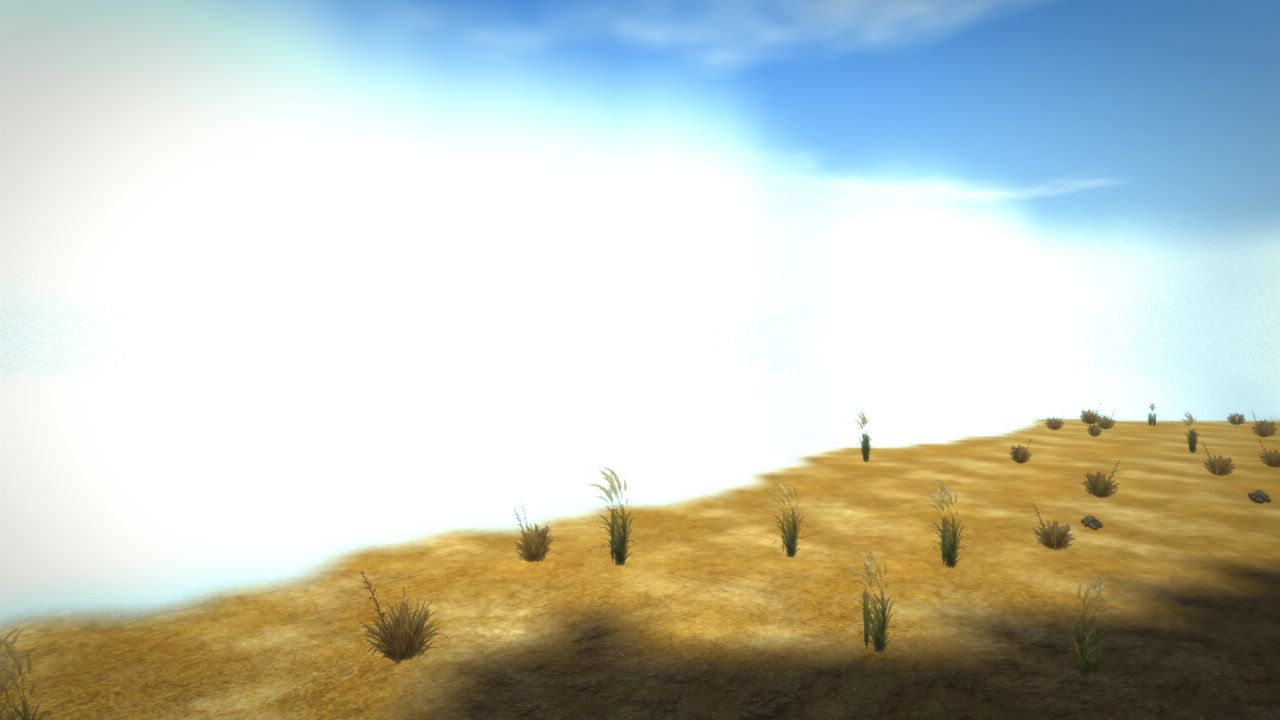
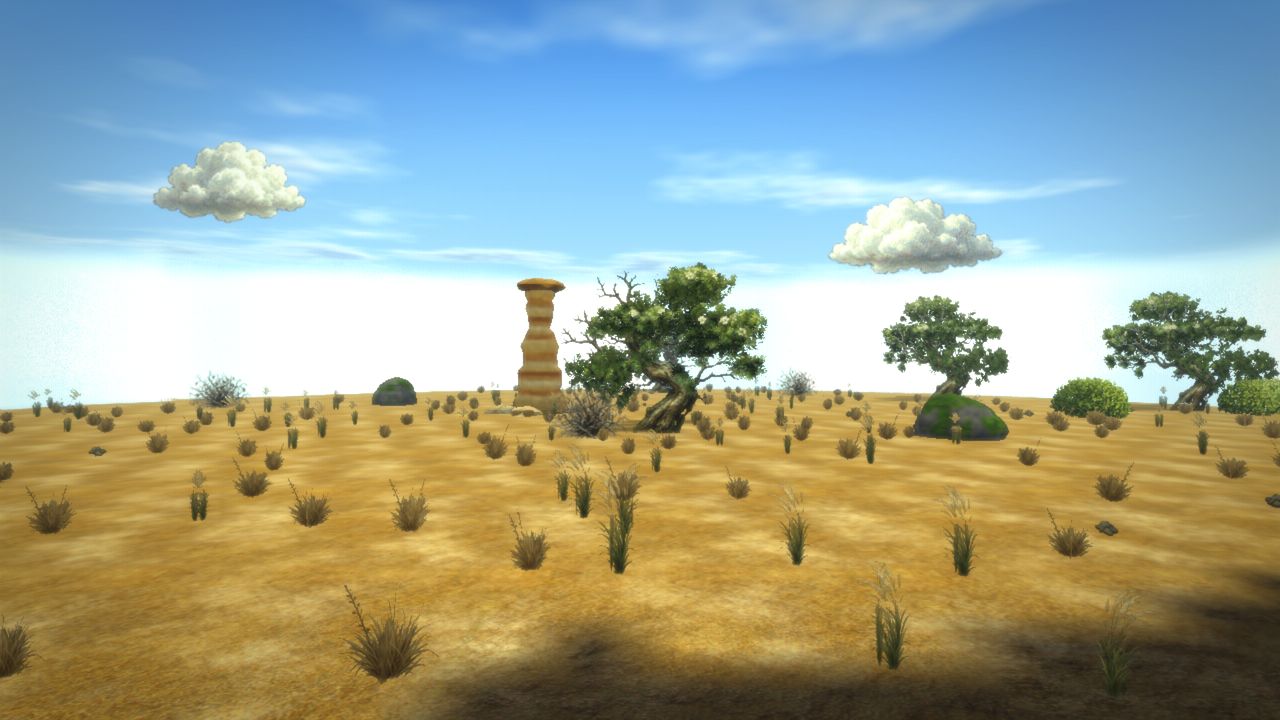
When the story lifts a stretch of the Ochlorion, the mist pulls away from you in a widening ring and the land appears as it passes. Until then that ground is only mist to you, with nothing to see or reach in it.
A chapter may send you somewhere, ask you to look into something, bring down a creature, speak with someone or bring them what they need. Sometimes creatures pour out of the mist and march on a spot you have to hold, and some of them lose heart as their fellows fall and turn back. Every chapter ends with a named boss: bigger than its kind, far tougher, with its name and a red health bar under the compass. Along the way you find letters, orders, ledgers and carvings in camps and ruins, which open in a reading window and hint at who is behind it all.
Some quests change the village itself, and the villagers who were there talk about it afterwards. You track one quest at a time: its next step shows under the clock and its mark on the compass and the map. In multiplayer each player has their own progress and their own lifted mist.
Three new lands, and a fallen kingdom
The world grew eastward by half, and the new ground was filled in. Each land stays hidden in the Ochlorion until the story draws the mist back from it, and each has its own camps, ruins, creatures and a waystone at its heart.

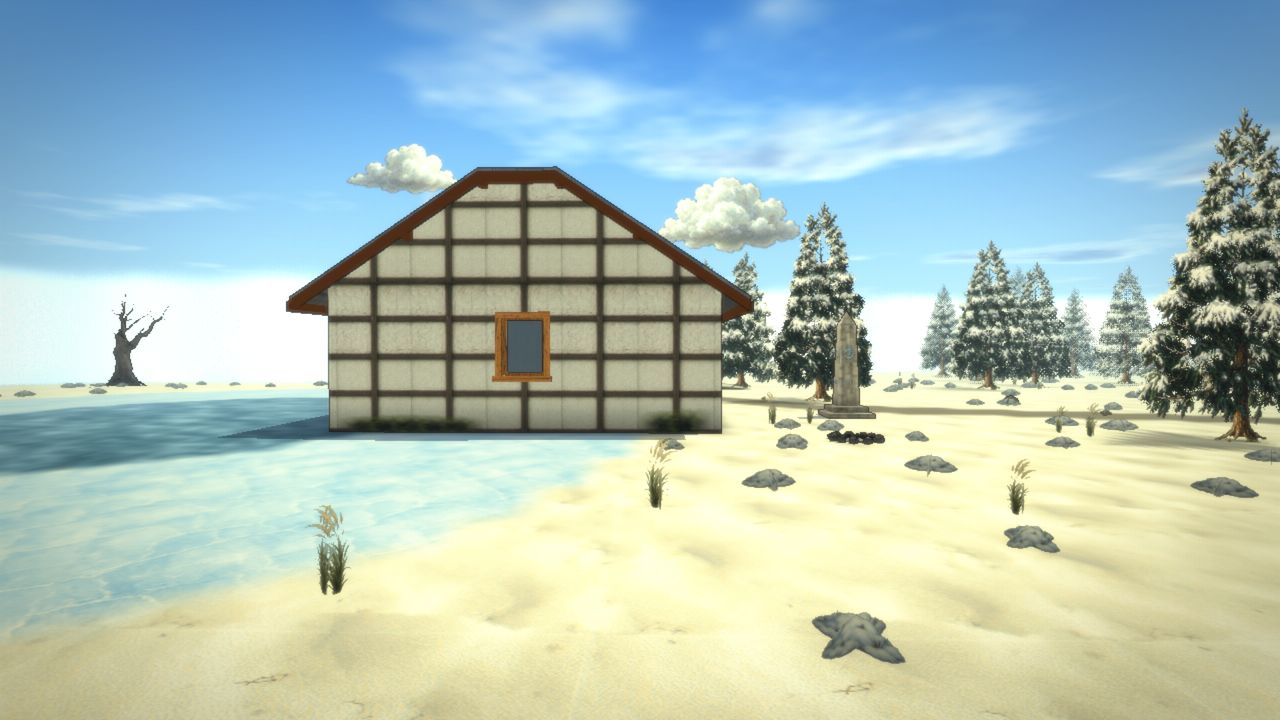
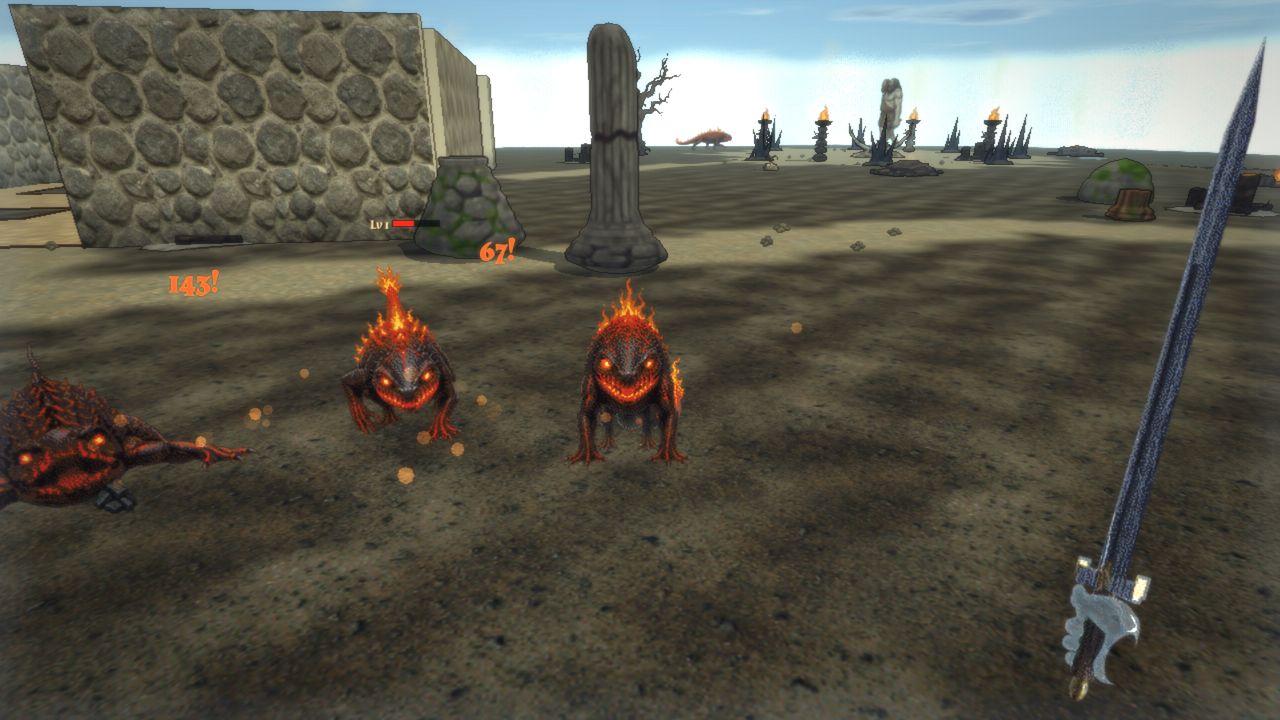
The Savannah is dry golden grass, dunes and thorn trees, with a ruined fort at its heart, a waterhole among the reeds, a raiders' camp, a cockatrice nesting ground and an old colonnade half buried in the dunes. The Volcanic is black ash, lava vents, tar pits and obsidian, with a roofless fire-temple, salamander fire pits and a draugr forge-camp. The Tundra is snow, frozen ponds and pine woods, with a hunter's lodge, draugr barrows in a ring of standing stones and a ruined watchtower. Each is a chapter of its own, taken in any order, and each ends with a boss waiting: Vorgath, the Ashen Ettin; the Flayed Rider; Hrimfang, the White Wyrm.
Beyond them, along an old road in the north-east, lie the ruins of a kingdom no one remembers: a town round a cobbled square with a toppled statue, a walled garden of withered roses, an old battlefield with broken trebuchets, and a great castle behind its curtain wall. New building materials came with it, from Black Marble floors to thick Castle Stone walls and a Hunt Tapestry.

Side quests and new ground
Side quests come along the way. Constance hears a rattling behind her house, and what's in the reeds turns out to be more than a rattle. Grace finds a Wildmarch forming behind her home where the mist has drawn back of itself. And Thomas asks you to look into the wood east of the village, which Piers swears is haunted, Edith says is marsh-light, and Hugh wants to measure.

Over the first weeks the Ochlorion also gives up new land round the village on its own, and on your tenth day Thomas asks which way the village should grow first.
Friendship quests
Every villager now has two story quests of their own: one when you become friends, and one when you become best friends. That's sixty-six in all, each written in the villager's own voice: Agnes's rooster who ran, Alfred's night patrol, Edmund's ballad that needs a hero, Hugh measuring the mist, Lambert's ewe at the edge, Marigold's dairy show, Thomas's silent bell, Tobias's juggling kobold, and many more. Each begins with the villager coming to find you, and some leave the village changed: candles at the wells, a tapestry on the church wall, a banner on the green, a supper table set out.
Choices that stay with you
As you grow close to a villager, they ask you three questions over time, one at each step of friendship. Every answer moves them a little along one of four leanings: daring or cautious, open or reserved, generous or thrifty, trusting or questioning. It changes them: a daring villager is readier to join your party, a generous one gives more gifts, a trusting one comes to church more often. They'll bring your answer up again days later.
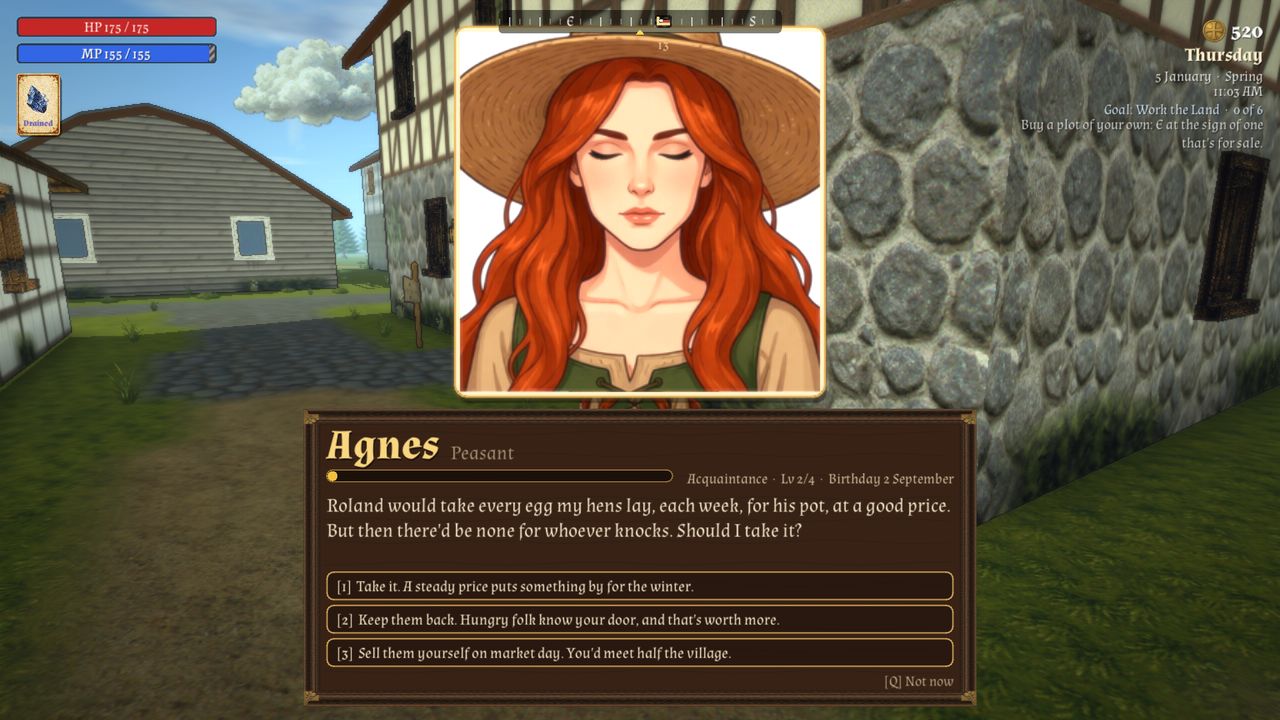
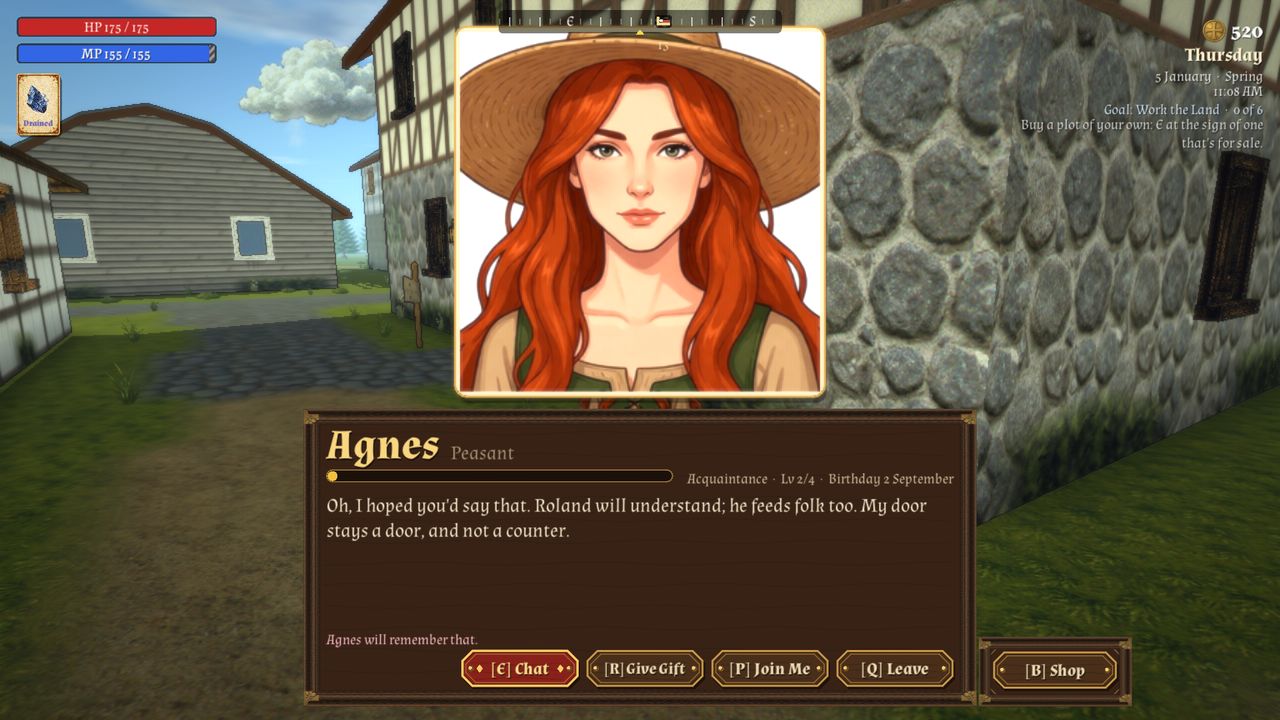
The village also keeps a reputation for you: your generosity, your courage in a night raid, your honesty with favours, and your piety. Villagers remark on it, and they react to what you've done: your first land bought, your wedding, a chapter finished, a raid beaten back.
Taking sides
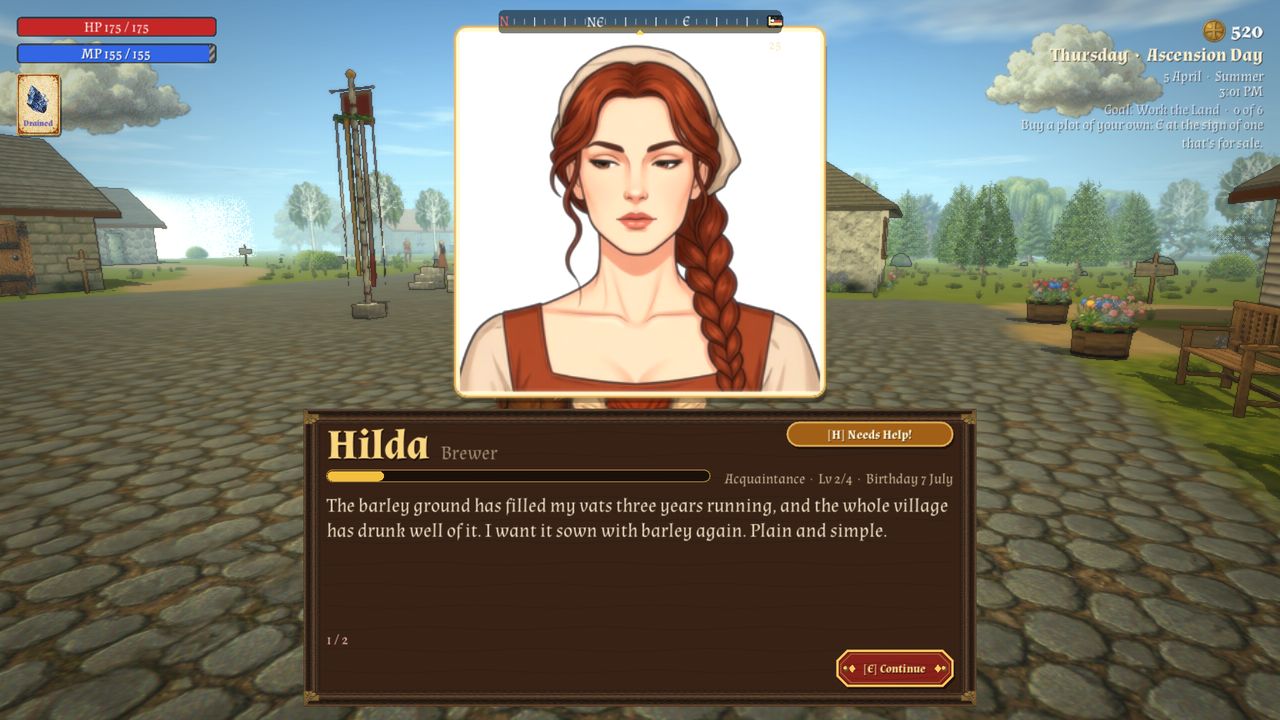
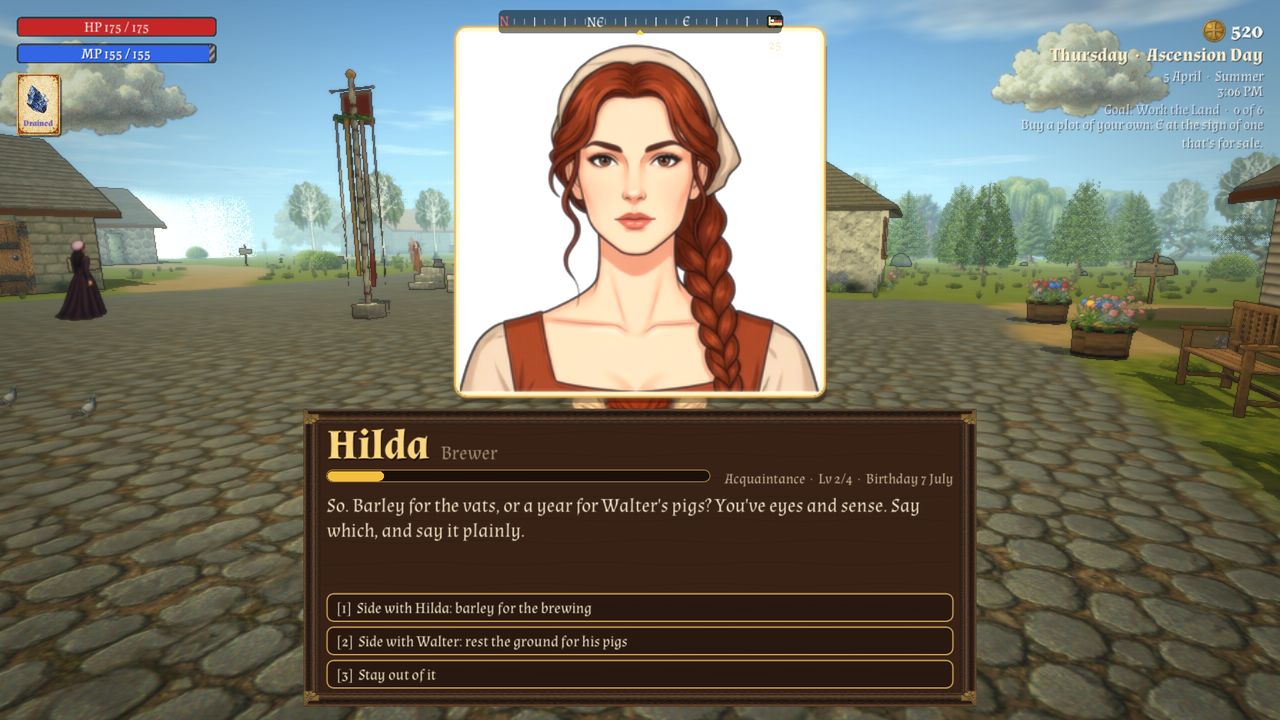
Twelve pairs of villagers want what can't both be had: Hilda's barley or Walter's pigs on the tired ground, Ranulf's forge or Lillian's bleaching linen, Edmund's late songs or Bertram's early rising. One of them puts it to you, telling the other's side fairly too. Side with one, or stay out of it, and live with what it costs.
Some night raids now fall on two hamlets at once. You can't be at both, so you choose whom to stand with, and the other may lose one of its folk to a capture cage by morning.
The Mignumi ask
Speak to a Mignumi, and sometimes it asks something of you instead of grumbling: bread, coin, its lost name, what the church sings to, whether anything means anything. Answer kindly and truly, and it bows and goes; warm enough of them and they start coming to church. Answer cruelly, or with a lie, and it becomes a Draug where it stands.
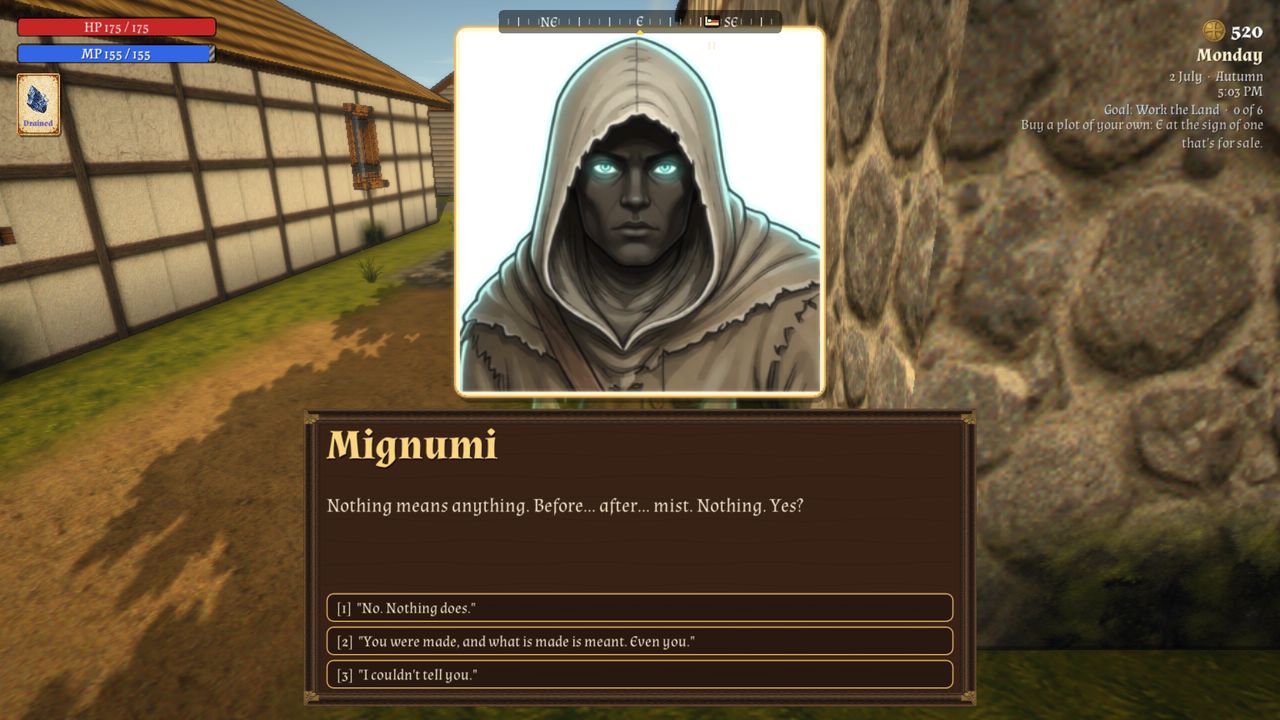
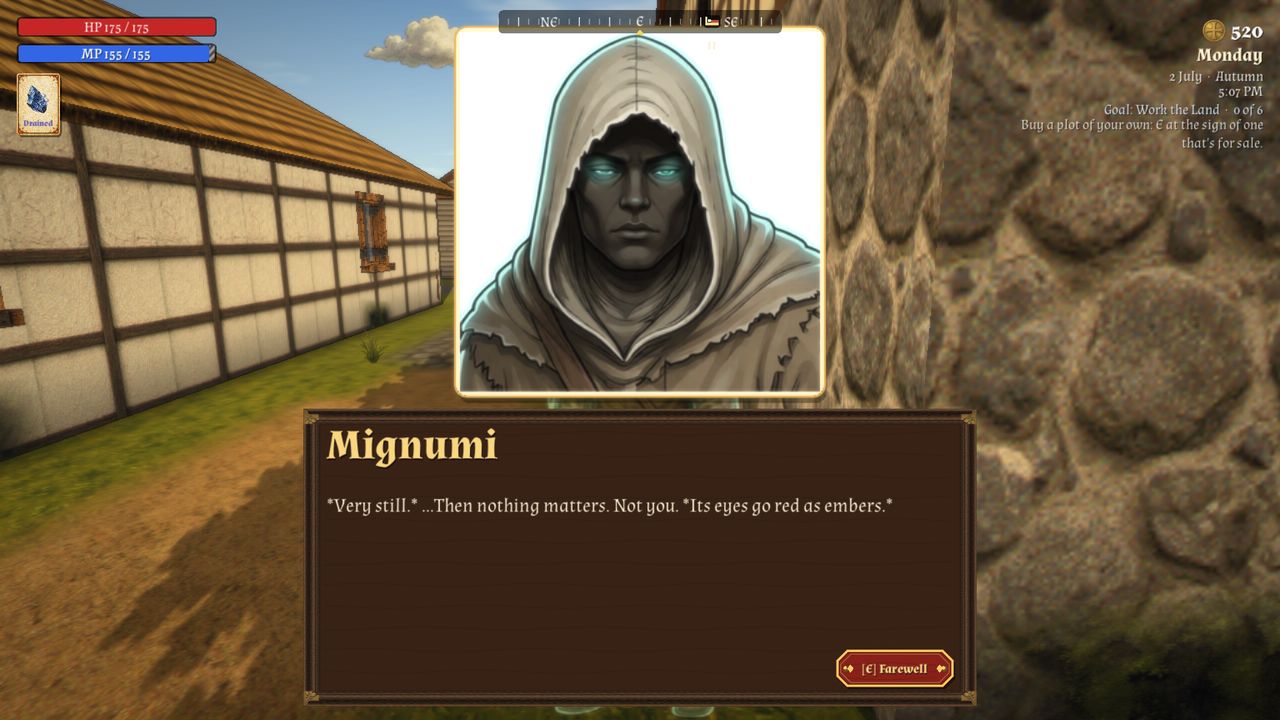

There is never a choice to spare a monster: the creatures have given up their goodness, and would only use mercy to seek your death. Every choice you make, the day and what you chose, is kept in your Chronicle.
Thomas's Counsel, and the Ways to Live
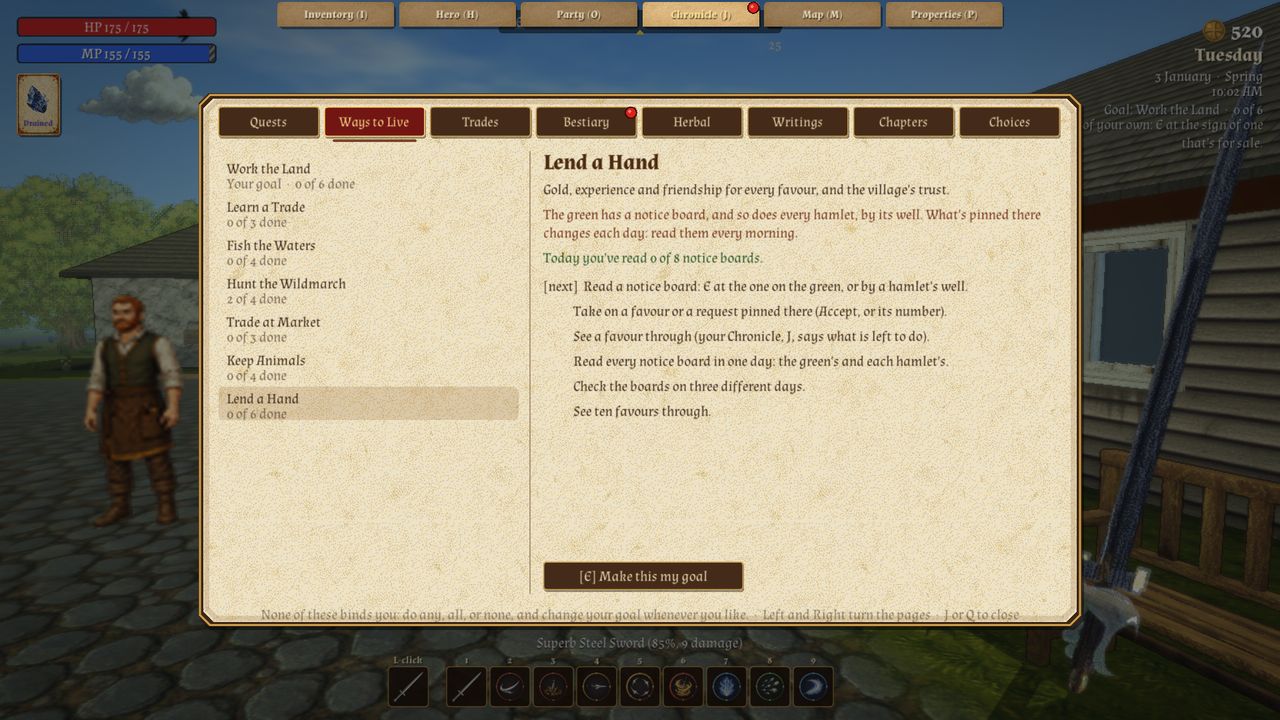
There are many ways to play, and a newcomer can be unsure where to start. So on the morning of your second day Thomas comes to find you, tells you there are many honest ways to earn your bread here, each a calling, and asks which draws you: work the land, learn a trade, fish the waters, hunt the Wildmarch, trade at the market stalls, keep animals, or lend a hand at the notice boards. He gives you advice for the way you choose and a little to start with.
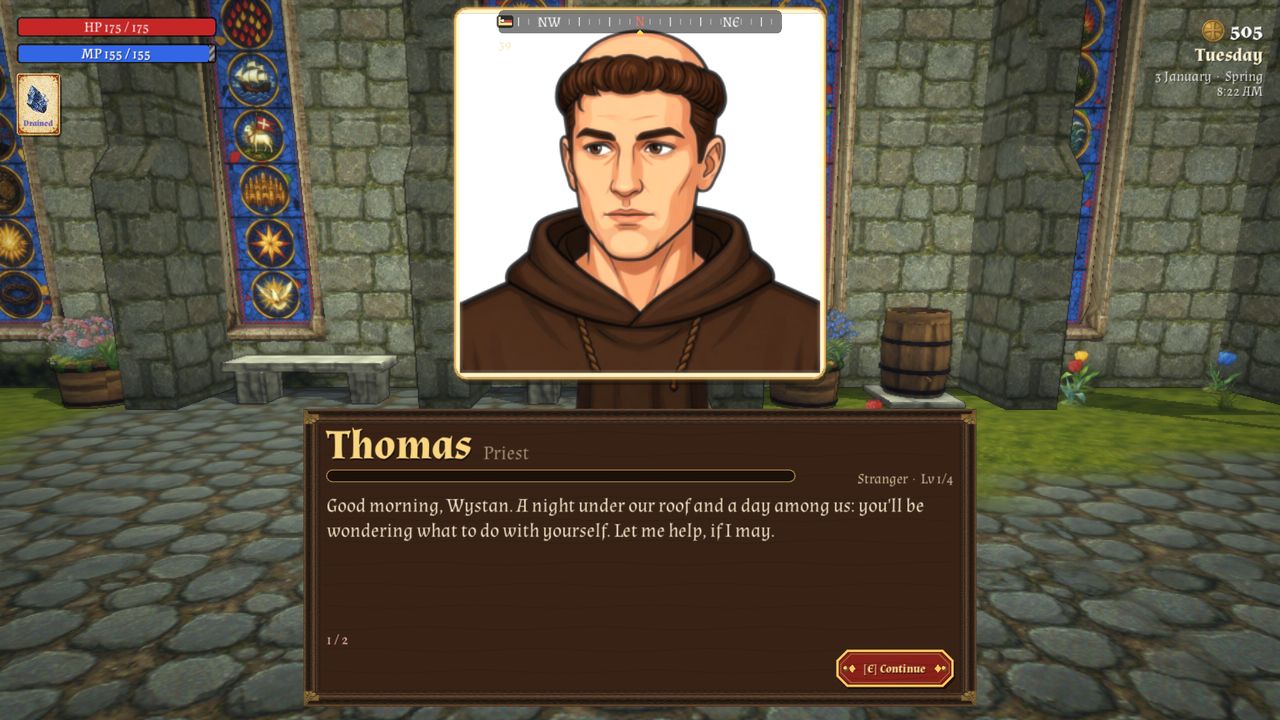
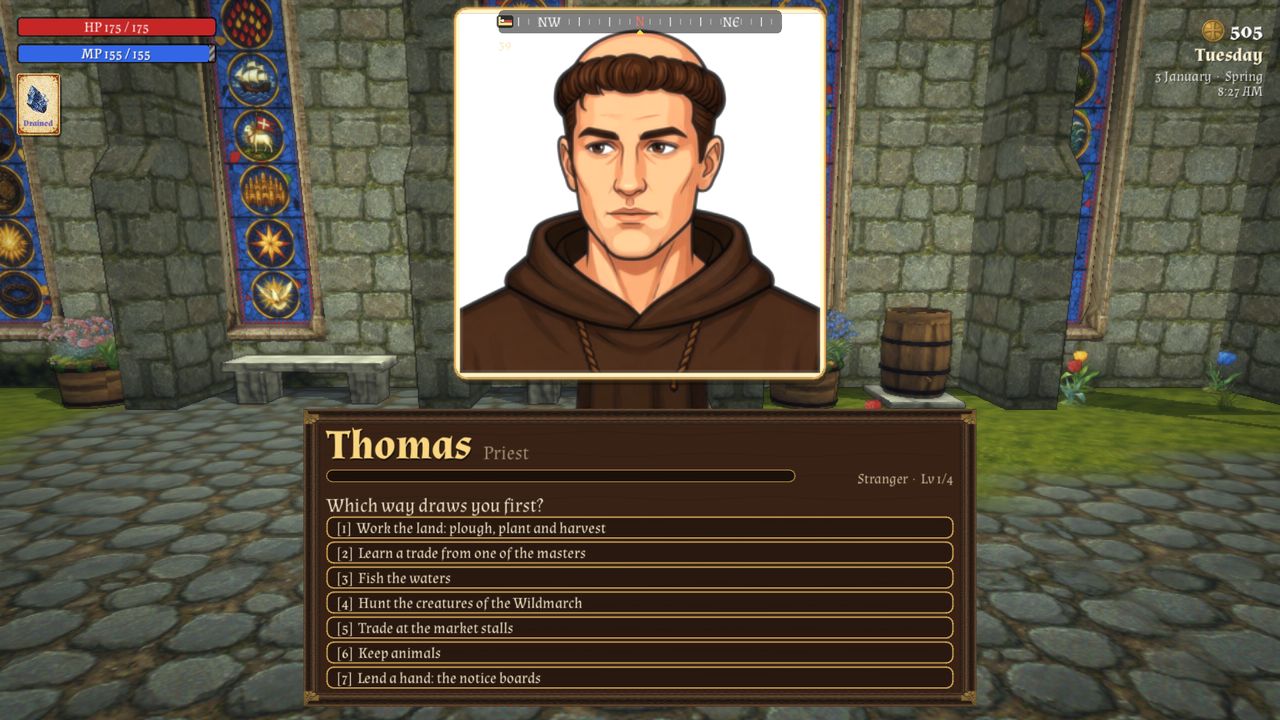
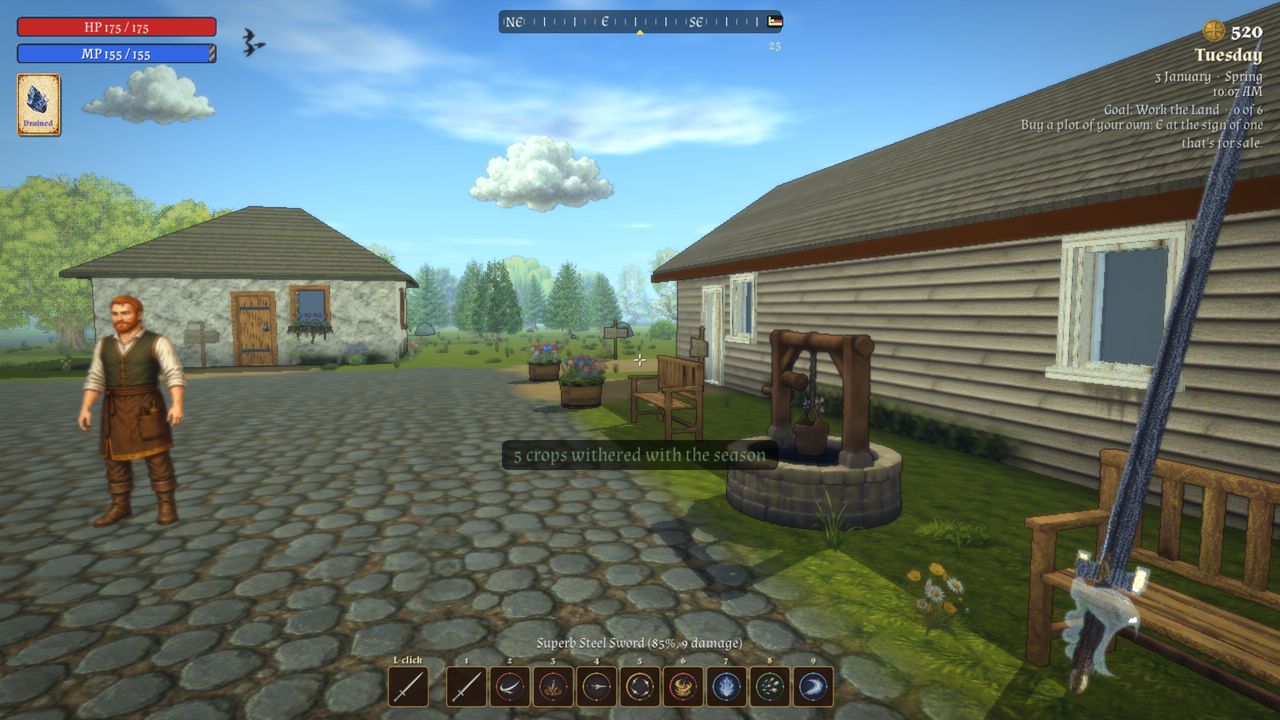
Then he sets them all down for you on a page of your Chronicle, with what each earns, whom to see and its first steps, ticked off as you go. Your goal shows under the clock with its next step, and nothing binds you: choose again whenever you like. Lend a Hand asks you to read the notice boards in every hamlet each day, and the clock keeps count of how many you've read.
The Chronicle
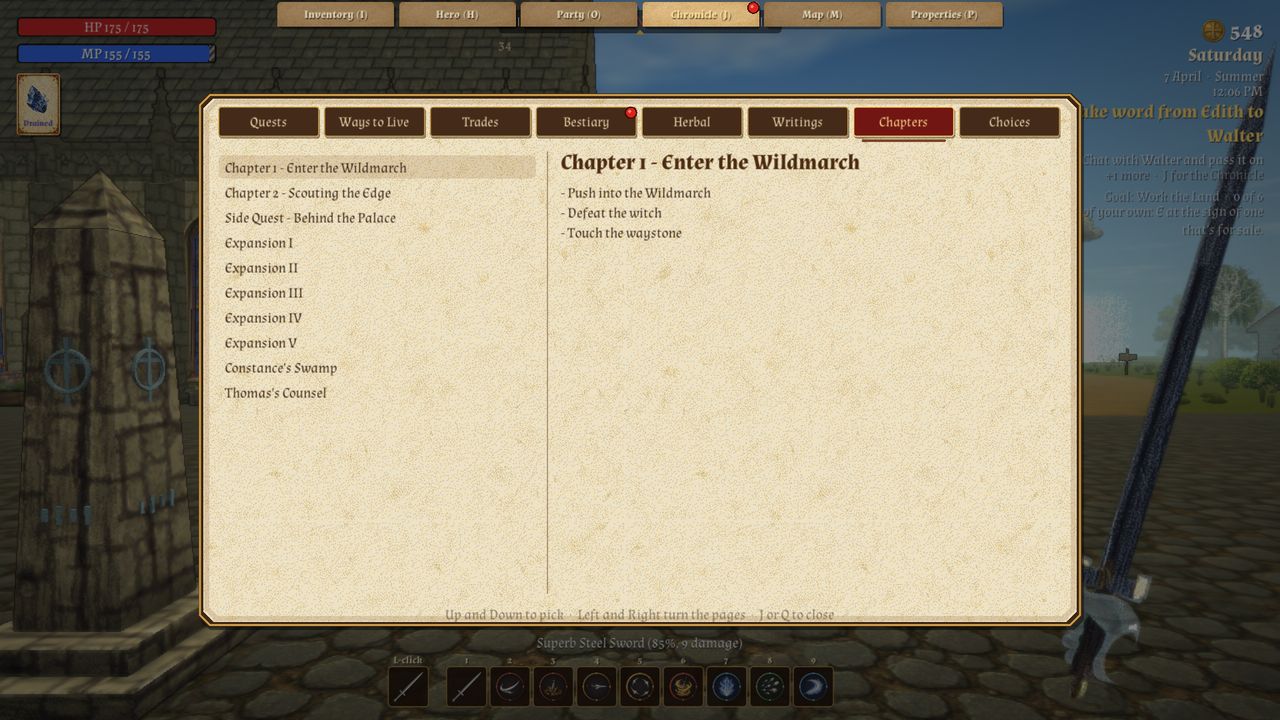
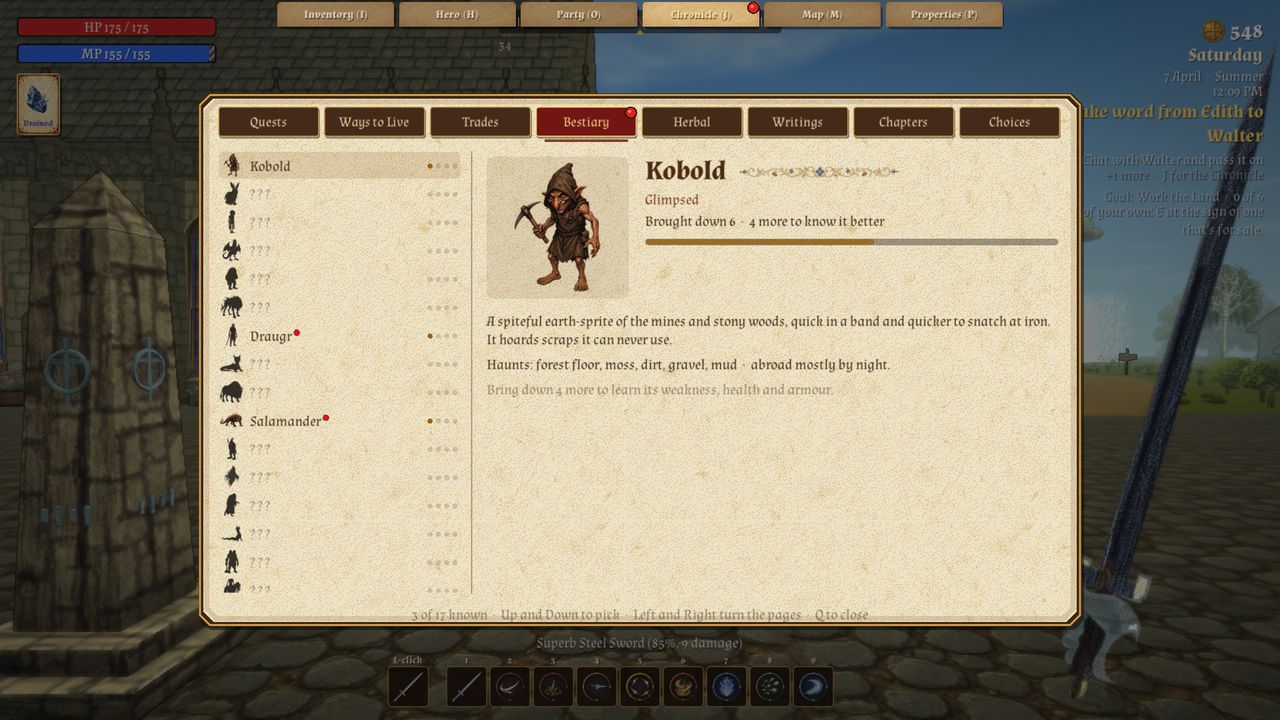
The journal, the Bestiary, the Herbal and your records are now one book, the Chronicle (J), with tabs along its top: Quests, Ways to Live, Trades, Bestiary, Herbal, Writings, Chapters and Choices. Turn the pages with the arrow keys. Writings keeps every letter, note and ballad you've read; Chapters keeps every chapter you've finished, step by step.

The world in 3D
Much of the countryside, painted as flat pictures until now, is real 3D. Trees near you are built from their own paintings, trunk and boughs with clumps of leaves all round, and fade smoothly from picture to 3D as you come closer. Rocks, stumps, standing stones, ruined pillars, mushrooms, crystals and more are now proper models, and bushes and reeds turn 3D near you too. Two new Graphics settings turn them off for slower machines.

Villagers who sound like themselves
Every villager's dialogue was rewritten, each in the light of a Christian thinker of their own, in their own words. A second pass made them less repetitive, with the faith showing more in how they see things than in how often they name it. And they have new lines for everything new: their questions and leanings, your reputation, their quarrels, the quests you've finished, and rumours that start going round later in the story, some true and some false.
Companions
A new Party screen (O) lists everyone who has ever fought at your side, with their level, health and where they are now. Choose their level-ups point by point if you like, buy them swords, armour or better magic, and fill their packs with remedies they drink themselves in a fight.
And a few more things
- The day of the week sits large in the top right, with the date, the season and the hour under it.
- Friendship no longer fades if you miss a day's talk: only your own choices cost it now.
- An easier start: no rain in a new game's first week.
- Hold the button after a swing and a heavy blow winds up as soon as the sword is ready.
- Creatures drop things that make sense for them, and less often.
- A new night sky: thousands of stars, the Milky Way and shooting stars.
- 119 new sound effects, from knocks on doors to cages creaking open and pages turning.
- Walks and runs now match how fast everyone moves, and blows land on the frame where they strike.
- Maud has a new look.
- Many bug fixes and speed-ups throughout.
Thank you for following along. The mist is drawing back; see what it leaves.
All dev diaries