 Ultra Nebulum
A village at the edge of the world
You wake in a room above the tavern with no memory of the road. Everyone here walked out of the mist, one at a time. You are the thirty-fourth.
Coming to Early Access soon
For Windows, Mac and Linux · Alone or with friends · Latest dev diary

A wall of drifting mist stands at the hem of the known world. Nobody remembers crossing it, and nobody can cross it back. But where land is tilled, planted and built on, it draws away.
Ultra Nebulum is a first-person medieval life game about making a place for yourself in the village that has grown up there: its work, its seasons, its feast days, its people, and the things that come out of the dark.
Latest dev diary · 18 November 2026
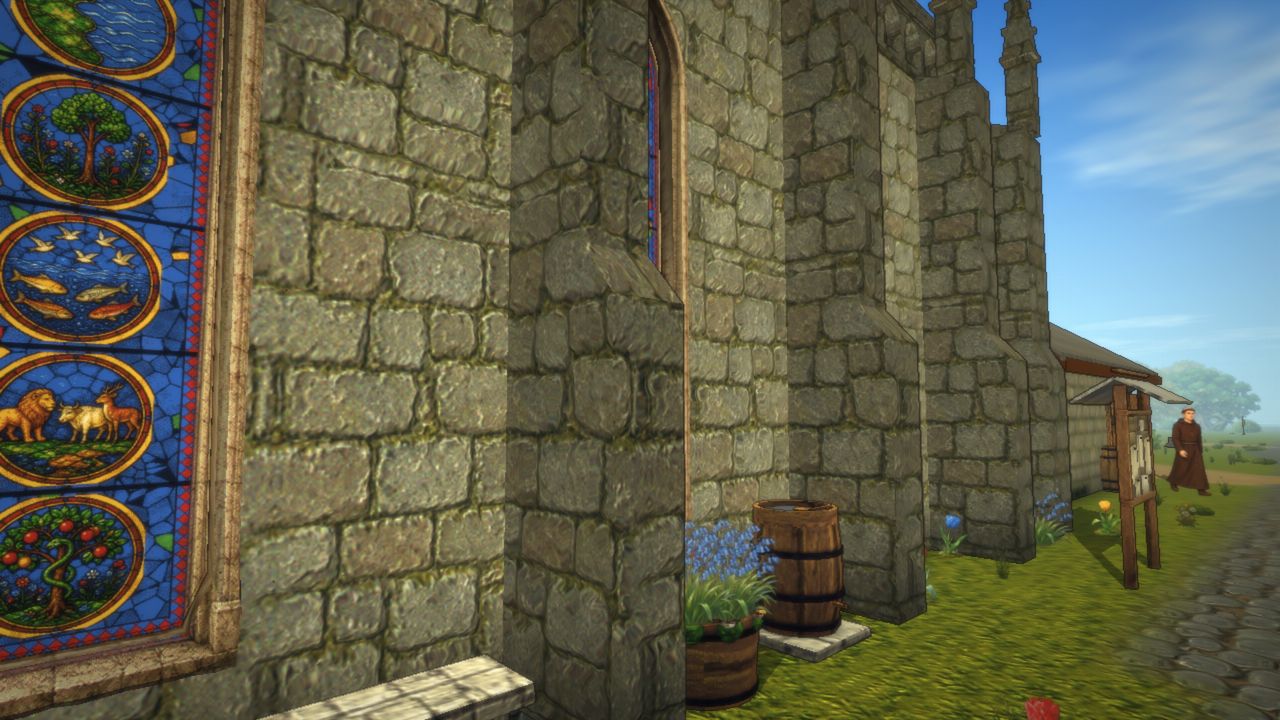
A quieter week of polish. Every line in the game was reworded in an Old English word-stock, with kennings from each villager's own trade, and twenty-one villagers took Old English names. Stone, timber and thatch now catch the light, spells throw sparks and light their own way, and quests bring their own cast and props.
Start with the sneak peek: a first look at everything there is to do. Then take a closer look at each part of village life.
More on our YouTube channel
Thirty-three villagers, each with a trade, a home, a temper and a day to get through.

The baker is up before dawn. The tavern folk are up late. Tradesfolk take their turn at the market stalls, the village gathers on the green in the afternoon, and on the Lord's Day the bell calls everyone to church.
Nobody waits around for you. Find them where their day has taken them.

Every villager has hundreds of lines of their own, a favourite gift, a birthday, and one thing they value above the rest: a kind deed, a thoughtful present, time and talk, or a fight shared side by side.
Do favours, hire a hand for your fields, ask someone to walk the roads with you. In time, court one of them, and be married in the village church.

Buy a plot in the village or out in one of seven hamlets and build on it wall by wall: floors, roofs, windows, furniture, a forge or a loom. Then build upward: stairs or a ladder, a second storey, a jettied upper floor, an open terrace or a loft. A furnished home rests you faster.
Plow a field and sow what the season allows. Keep cows, sheep, pigs and hens, and breed them: calves, lambs, piglets and chicks take after their parents. Twenty-seven crops, and none of them grows on a day it wasn't watered. Rent a stall on the green on market day and haggle over what you grew.
The same pond, four times a year. Rain waters your crops, snow settles in winter, and every month has its feast.


Sign on as an apprentice and do the work with your own hands.

Strike iron at Wayland's anvil, throw the shuttle at Elswith's loom, churn in time for Sunniva, cut a quill for Aldwin. Forty-eight kinds of work across sixteen trades, each one a short game of timing, aim or a steady hand.
You're paid by how well you worked. Rise through the ranks, then set up a workshop of your own: every table plays its trade's own work, and the higher your rank, the more you make at once.
Two skills need no master at all. Grill over a fire pit or a hearth, and fish the ponds and streams; both rise through the ranks as you go, to harder meats and rarer fish.
Sixteen of them roam the wild ground, most of all by night, and some are bigger and fiercer than the rest of their kind. Every blow is wound up before it lands. Watch for the tell, and step out of it, or creep up unseen and strike first.


Some nights, after ten, a pale face follows a little way behind you. Look straight at it and it slips off into the trees.
It never comes onto property. It only waits at the edge. Be indoors by midnight.
The village is better shared. Host a world straight from your own game, give your friends a short join code, and they walk out of the mist beside you. No ports to open, or play over your own network.
The same clock, the same weather, the same villagers going about their day. Buy plots side by side and watch each other's houses go up, wall by wall. Fields, stores and doors are shared; your friendships, pockets and trades stay your own.
Creatures hunt all of you alike, and everyone who lands a blow shares the spoils. The night passes when everyone is abed.


Roads run out through the mist to the hamlets, each round its own green and well. Waystones carry you between them for a little mana.
Water a field, bless a harvest, call rain, light the dark, or put a fireball through a pack of barghests. Spells come in three tiers.
Pay a neighbour to water, plant, harvest, gather wood or sell your goods. Commission a master to work up your materials overnight.
Someone always needs something fetched, found, carried or brought down. The notice board on the green keeps the list.
Twelve feast days dress the village through the year. Dance round the maypole at Easter, sing carols at Christmas, and try your hand at the Harvest Home fair. Sundays are for church, rest and no trade.
Trout the year round, perch in the warm months, pike at dawn and dusk, and rarer fish for a skilled angler. Strike when the float goes under and play the fish in.
Grill what you catch and raise at a campfire or a hearth: turn each piece when it's golden, lift it off before it burns, and beat down the flare-ups. Not in the rain, though.
Crouch low and a creature may never see you. Dodge aside from a blow, or leap in with one of your own. Strength, Dexterity and the rest each change how you fight.
Rent a market stall for a morning or every week. Villagers come by for what they like best, and you strike a bargain with each.
Presets from Very Low to Realistic, picked for your computer the first time the game opens, and a retro screen with scanlines and glow if you like the look.
Ask a friend to walk with you. A knight, a healer or a pyromancer fights by the same rules you do, and grows with every battle.
What people ask most about Ultra Nebulum.
Ultra Nebulum is a first-person medieval village life game for Windows, Mac and Linux. You arrive in a village at the edge of the world, ringed by a drifting mist called the Ochlorion, and make a life there: learn a trade, farm and raise animals, build a home, befriend the villagers and stand against creatures of old European folklore.
Ultra Nebulum is in development and coming to Early Access soon. Follow the dev diaries on this site for news of each update.
Windows, macOS and Linux.
Yes. You can host a world from your own game and friends join with a short join code, with no ports to open, or play over your own network. Up to six players can be in a world at once, the host included. Everyone shares the same village, clock, weather and villagers, while each keeps their own friendships, pockets and trades.
Apprentice with sixteen masters (blacksmithing, weaving, baking, brewing and more), grow twenty-seven crops through four seasons, keep and breed cows, sheep, pigs and hens, build a two-storey home, cook over a fire, fish, learn magic from the village priest, befriend and marry a villager, keep the feast days, and fight sixteen folklore creatures at night.
It shares the cosy heart of a farming and village life game, with seasons, crops, animals, friendships and marriage, but it is played in first person in a 3D medieval village, with sixteen hands-on trades, building wall by wall and two storeys high, and creature fights based on reading each blow's tell.
The game offers graphics presets from Very Low, made for slow laptops, up to Realistic, and picks one for your computer the first time it starts. The Low preset uses a retro screen that is also much lighter to draw.
Thirty-three villagers, each with their own trade, home, daily routine, personality, favourite gift and birthday, and hundreds of lines of dialogue of their own. Friendship grows slowly through talk, gifts and favours.